
Finding my safe space in the BDSM community again
*trigger warnings* abuse, BDSM, power dynamics, systemic abuse
It’s been 2 years nearly to the day since I last set foot in a dungeon. The last time was at the final Thunder in the Mountains in 2021. A farewell event honoring the legacy that Rich Dockter created in the international BDSM world.
Presenting for that final year was one of the biggest privileges of my life…a literal bucket list experience. Yet, my anxiety prevented me from fully engaging with attendees or even enjoying myself in the dungeon. I taught my last class feeling broken, irrelevant and distraught over my failures. I felt I had done everyone a disservice by not being “healed” by the time the event started. I was convinced by the time I stepped off the elevator for the last time that I was done teaching consent forever.
So, it was a genuine shock minutes later when friends (the folks who ran the Thunder volunteer crew) approached me asking me to present at a new conference they’d be producing. Thunder was retiring and a new event was in the works would be rising to meet the challenge. Nothing could replace what Thunder was to our community because no one can replace Rich and the respect he commanded.
I agreed only because of trust.
Everything we do is about trust
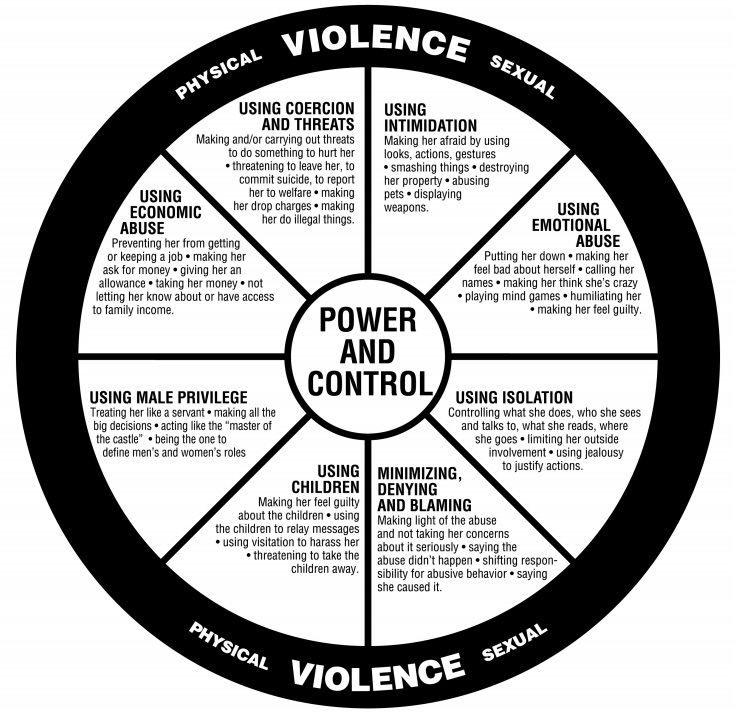
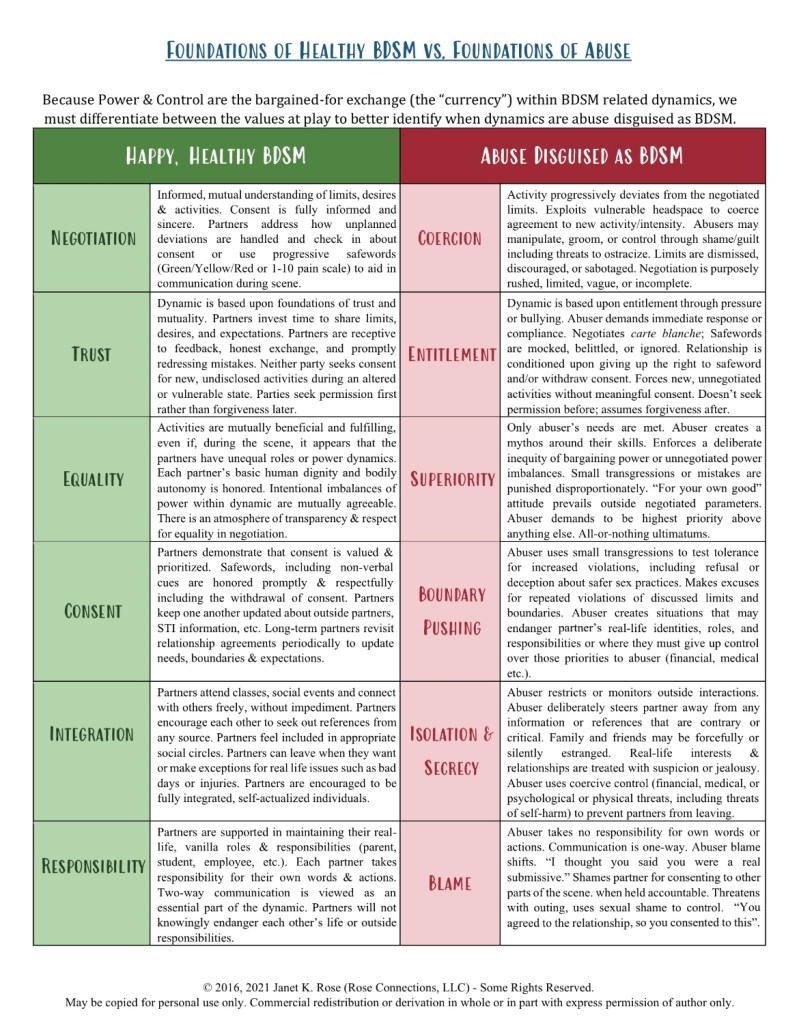
I often refer to the “currency” of BDSM as power & control. That is the “bargained for” exchange. It is an intentional way to connect the dots for attorneys and advocates who are the gatekeepers of justice/resources related to intimate partner violence (IPV). Having been trained as both, I became intimately aware of how the tools that describe IPV per se demonize what happens on BDSM relationships, which catches good relationships and paints over the bad ones. By focusing the entirety of the evaluation on “power & control” consensual power exchange play often gets painted with the wide brush of “abuse” without the nuance of how abuse does and doesn’t happen in our community.
BDSMers often say that “everything we do is about consent”. But the existence of the abuse experienced even in my own life, much less the scores of survivor stories we have floating around both told & untold, begs us to reconsider the reality of that statement. Yet, it isn’t the core foundations of BDSM that hurt me and others…it was abusers who used the inherent trust of BDSM to hide their abuse.
See, everything we do is actually about trust. Trust in ourselves to take a beating and smile afterward. Trust in our partner to notice our reactions, communicate their needs, and adhere to the agreed-upon protocols. Trust in our community to provide a structure of education, support and care.
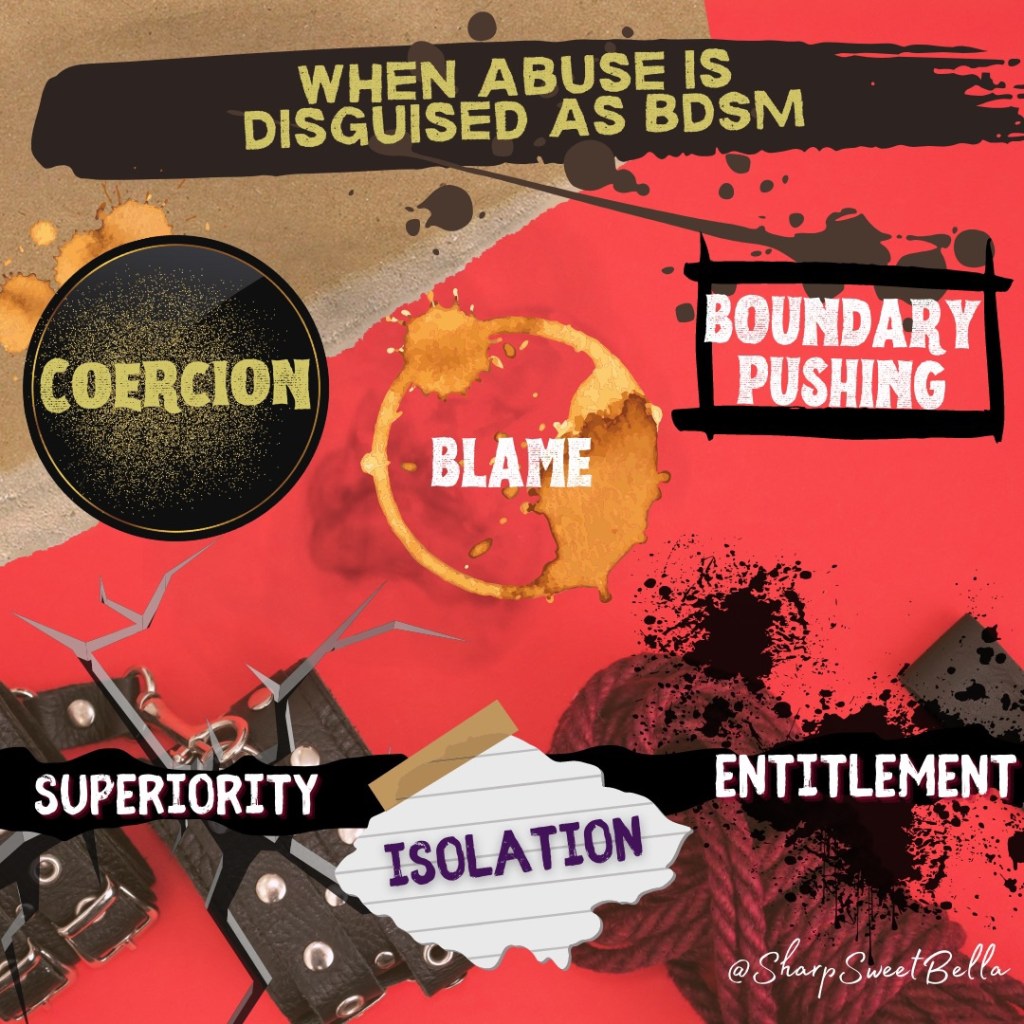
But what many fail to notice is that abuse often comes into our community through normalcy. They behave long enough to gain positions of authority and credibility to shield their actions so no one sees how they twist that trust in the bargained-for power & control exchange into harm.
As Keith Reniere and NXIVM proved, attorneys will try to use BDSM and thus consent as a defense for unspeakably bad acts. They rely on the public image of kink to excuse any number of abuses, giving the entirety of the community a slick sheen of guilt by association. Similarly when we find abuse in our community, we tend to shove away those sounding the alarm bells because if they do…then the whole community is at risk. Abusers know this and manipulate the vanilla world’s deliberate Puritanism and ignorance to operate with impunity.
See, abusers are the same no matter where they are – it’s just that the relative marginalization and demonization of this community for its sexual adventurousness makes us a target for abusers. They can coerce and manipulate “consent” to any number of acts, slipping in the abuse in the space between shame and pleasure. They know that if we go to police, doctors, social workers or advocates it means survivors like me have to risk being laughed out of the room, arrested, pathologized or further traumatized. The only line of defense is often the community itself – which is too fractured and under-resourced to be responsive in a real way.
I experienced abuse the first year I was in the Denver scene at the hands of a community educator, founder of the newbie orientation program. I trusted he was safe, ignoring the sickening feeling I had in my belly listening to him. He convinced me that I simply wasn’t experienced enough and after 7 months of pursuing me (the ONLY one pursuing me at all) I finally agreed to play (Read about what happened on “fix the fucking stair”). The whole night was just a slow motion explanation about why I shouldn’t give my trust so easily.
I walked out of that experience believing I was the problem. I decided I had been “too desperate” to play that’s why I made bad choices. I lost trust in myself. I lost trust in my ability to choose good partners. I definitely lost trust in this guy because consent was very much not his priority. But I also lost trust in this community – because when I was sobbing, yelling Red, no one came to my rescue…why? Because of the social capital the abuser had built up before I ever got there that told the DM’s (dungeon monitors – folks responsible for tending to the safety of the players) to back off and not interfere.
Trust is the beating heart of this community…and mine was bleeding out.
When trust fails…leadership also fails
So now I’m a (former) lawyer AND a survivor. I have already been outed and am too familiar with how difficult it is for any in my community to come forward if they’ve been harmed. I carry the weight of lived experience and intimately know how easily our safety is compromised when our community tries to seek support in the vanilla world. That world applies their power & control wheels to our happy & healthy relationships running over our whole community with the unnuanced label of abuse. Instead of helping us find the fine line of when trust and consent turns harmful and abusive, we are labeled and judged the moment kink is mentioned…serving no one except an anti-sex agenda.
(Even now as I write this, I am applying for jobs and run the risk of not getting them just because I admit to being in this community.)
My natural proclivity is to serve as a bridge between disparate viewpoints. As a lobbyist I brought together the teacher’s union & charter schools (it IS possible). As a mediator I helped people see one another’s point of view. As a disability attorney I offered solutions to better align state and federal programs. But not only that, as a supposed “leader” in the BDSM and poly communities (in quotes for a reason) I have been the nexus of overlap…the benefit of the liminal space I’ve been able to carve out for myself.
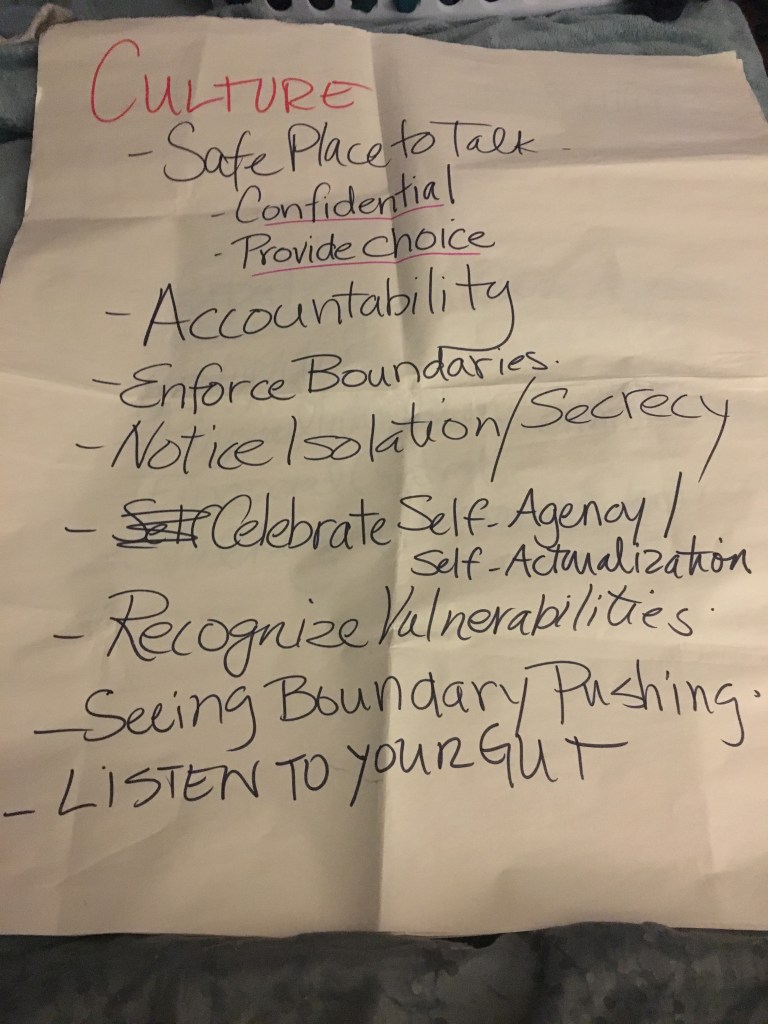
Since 2013, I have been teaching about consent so others don’t have to experience what I did. So that the community doesn’t reject survivors thrusting them into a never ending loop of “report or it didn’t happen” where reporting, which requires us to out not only ourselves, but our abuser (if we even know their real identity) and especially our community. The motive to protect the good people in the scene is a powerful driving force that stops many survivors from speaking up. We have to trust our community to be responsive, but often that response is pressure to make things even more dangerous or traumatic by reporting to authorities.
And in conversations locally with police, attorneys, educators and advocates, they tend to agree that while they want to create a safe space for us to report and get support, the reality of justice is dim at best. Their advice is that by investing in resources to address abuse within our community and providing a safe space for our survivors ends up pushing those abusers out back into the vanilla world where their tactics aren’t as easy to hide.
Yet, our community often circles the wagons around the powerful players who have invested their entire personality into becoming “leaders” of the public scene. They take on the financial risk of hosting an event or opening a dungeon so therefore they become the trend setters and cultural arbitrators of who is and isn’t worthy to be protected. They don’t invest in BIPOC friendly events because “if I do that for them I have to do it for everyone” – leaving the impression that equity is less important than laziness. They don’t invest in accessibility because they’re “just a private venue” without the financial resources or legal incentive to care. They wrap their whole being around their status and deflect every constructive thought as if it were a personal attack.
And lest you think I’m just grinding an axe about one event, one leader or one venue, the stories that survivors tell me from around the country align with the same premise: the problem children usually think the rules of equality don’t apply to them. And yet, as I teach in my classes, all of us regardless of the role we negotiate with a partner or which label we slap onto our vests, is secondary to the fact that we start and end each scene as equals. We have to exist in the real world and have to return to it after. Even for those 24/7 folks, there is a larger world we are a part of…and those rights remain regardless of what we negotiate.
Where things go wrong is when the protection of that imaginary status of personality weighs more heavily than the concern for community safety. As such, even raising that issue can result in us finding ourselves on the outside looking in….just like in the rest of the world. For example, I found myself “banned” from a local venue not because I had violated anyone’s consent but because I told my story and helped others tell theirs, which inevitably included criticism of the owner. When the consequences are passive aggressively issued to advocates but not to abusers, it says a lot about how quickly and effectively predators invest in the building up their social capital within hierarchies of power.
The abuser’s survival is secured by the structures they embed themselves in. So who is ensuring the survival of the actual survivors?
Because when we use the tools we needed to contain & banish the abusers, to instead contain & banish the advocates, leadership sends a strong message. Not only does this have an intentional chilling effect on survivors but also inevitably signals to any BIPOC, disabled and other socially marginalized folks that they better support the current regime or find the door hitting them on the way out.
While I have encountered varying levels of abuse in my time in the scene (since 2007), all of whom held either leadership positions or were entrusted with DM duties, the number of good, ethical, happy players far exceeds the number of abusers. But in a classic case of one bad apple spoiling the bunch, the tolerance of known bad actors placed in leadership roles significantly sours the taste of BDSM for me survivors of all kinds whether hurt inside or out of the community.
And in the current anti-sex, transphobic, racist, sexist atmosphere, it should be easy to see how and why our community should find a way to regain the trust that was lost…for we are the only ones who can shield each other.
Recovery isn’t a straight line
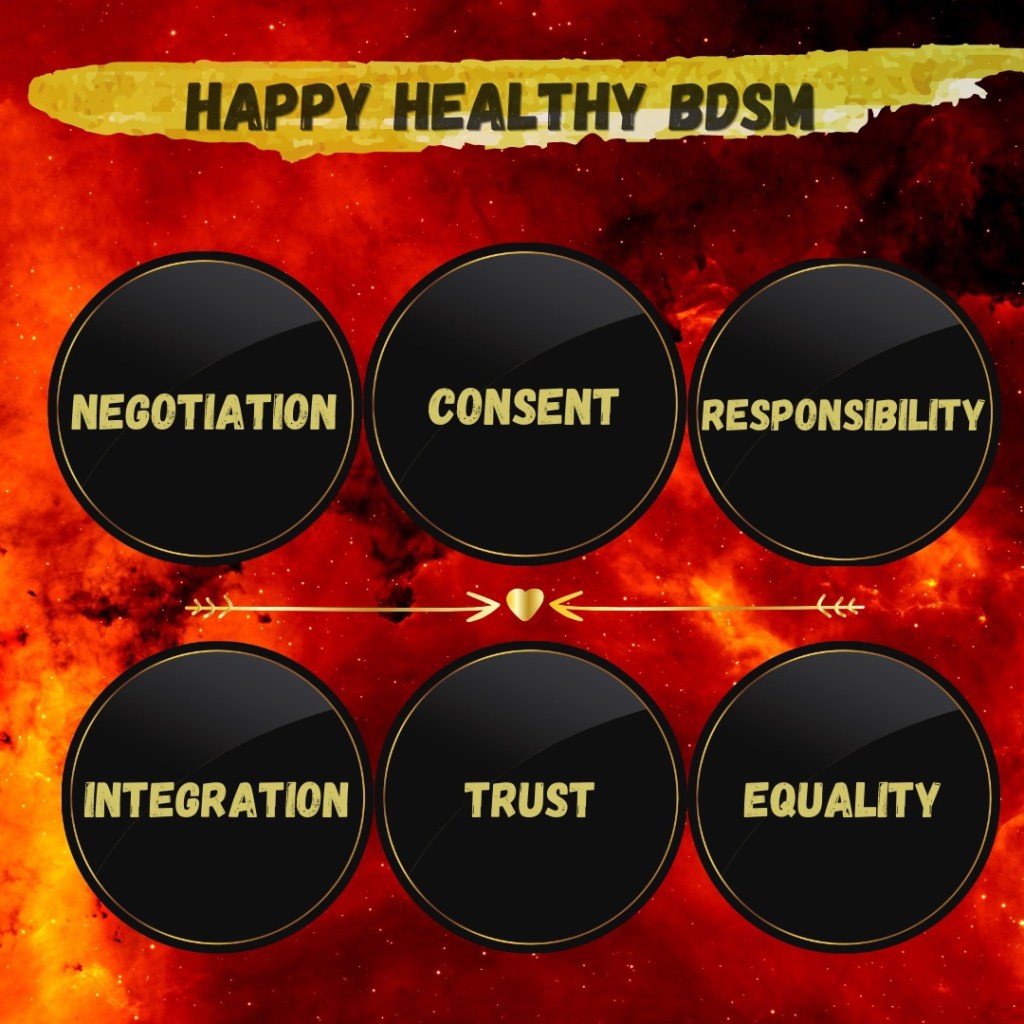
Today I am teaching a class on recovering from triggers, trauma & distrust – I have material I will present about grounding exercises, trauma informed ways to check-in with folks, and an acronym inspired by Mental Health First Aid (instead of ALGEE, it’s AGREE – I’ll post about that later). I’m teaching the class for others like me ❤️🩹 the class I needed in 2007 when my consent was so egregiously violated.
What I have found is that recovery is a bumpy, non-linear, illogical road especially when you’re in a community so politically isolated and systemically under-resourced.
You can’t just go to any therapist, but you have to find a lifestyle-aware therapist. Even then it’s no guarantee, because as some found out the hard way, if those therapists are friends with our abusers, we lose trust in one of the few resources available. Nor can you just go to police because “master nasty pants” from FetLife told you his name is John Smith not Jonathan Colesmith (fictionalized example) making it harder for police to investigate. You can’t just tell your story on the stand because will a jury understand how subspace scrambled the sequential order of what happened? It isn’t impossible, just systematically traumatic and institutionally dangerous. “Report or it didn’t happen” isn’t a solution, it’s an abdication of common sense & responsibility. And yet, even when people do report, nothing happens. So…how can we recover in that environment?
Even I had to walk away when it became obvious that the unbargained for, unelected leadership of local communities would favor the power of the abuser over the responsibility to exert control over their own venues or events. This complacent disregard for our community’s collective care (and even complicit in enabling the harm itself) is only further evidenced when those abusers are placed in positions as DMs and educators. Some interfere in their victim’s scenes (like mine did the week before he died) or abuse demo volunteers in the name of edgy education.
That’s why it’s been two years since I last walked into a dungeon. It ain’t because i don’t want to play; it’s because since 2016 I’ve rarely felt safe or supported enough in a venue to play.
Last night at GoDS Denver, I was ready…all dressed to impress. But the problem with being a consent educator is people come to me with their stories, asking for advice. I see people differently because of the trust people have placed in me. I won’t discuss their stories…but I know too many of the players involved. And when one of their stories overlaps with my own experiences of that person, I don’t feel comfortable sharing space knowing that they’ve already escaped accountability. It isn’t my place to tell others’ stories…but then I come face to face with my own, my smooth road to recovery becomes fraught with old perils.
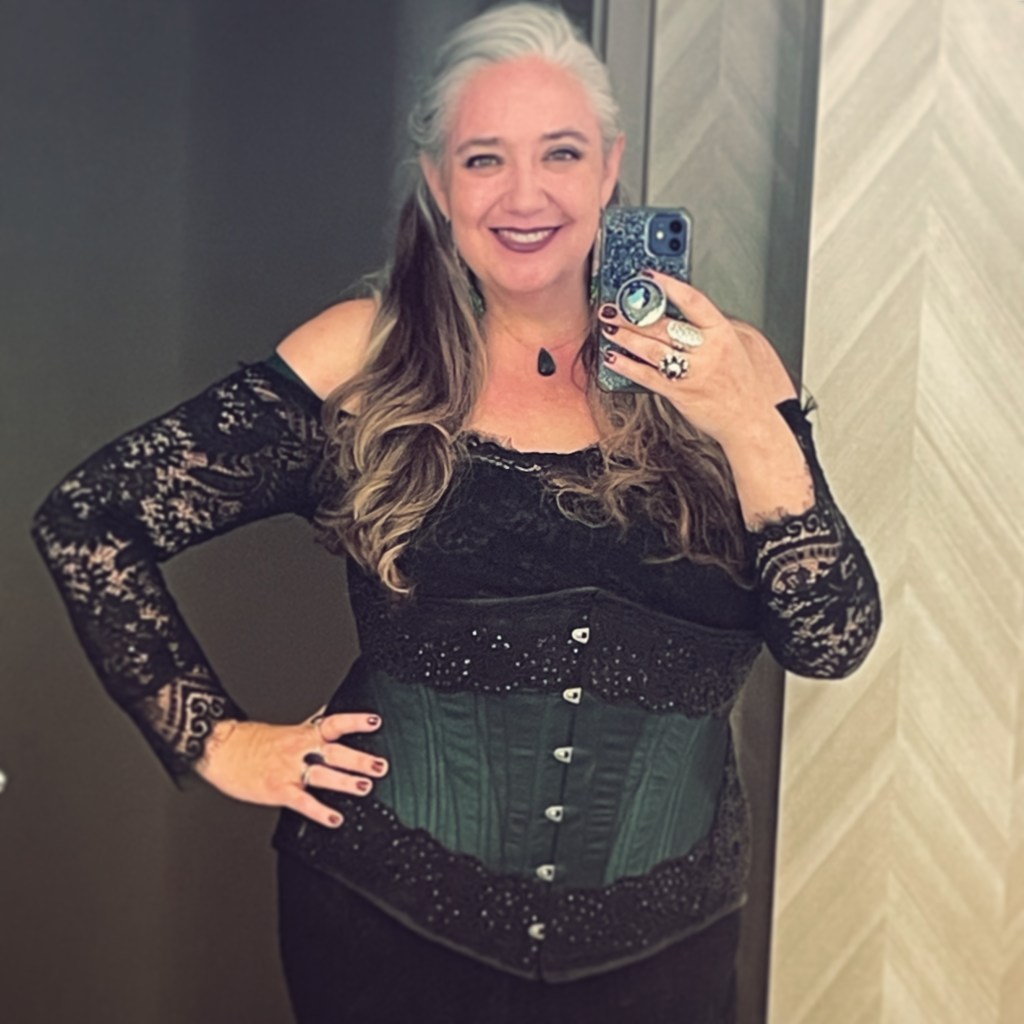
Last night was one of those nights. One where I found I couldn’t feel safe in a space where those stories converged into making me feel unsafe around people. I tried…I really did try. But I worried that if I needed intervention that i could not trust the outcome. Nor did I trust that problematic people would respect my space enough not to try to re-litigate the events that led to my opinion of them.
Everything we do is about trust…
And so…I trusted myself and I left. I had promised a thrilling primal take-down scene with my partner of 15 years – the kind that makes you wanna go home and have sex after witnessing. I sat there in the lobby, near to tears when the producer of the event came over to check in on me. I confessed that I got spooked but that it wasn’t a reflection of the event, just a reflection of I didn’t know where I fit into the community. “You have a place with us. That’s why we wanted you here.”
I doubt he knows how meaningful that was…or how my partner would use that sentiment later to trigger a wonderfully cathartic scene of release…but I recovered enough to feel like I can teach this class today. Because if I can demonstrate with my own story how we can maneuver around the barriers and roadblocks of recovery, people like me will have more hope, safety and joy. If we can create pockets of true collective care and mutual aid in this community, we can create models that will help everyone else.
One of my talents is in reading the political climate of any situation. And right now, parts of the BDSM community have lit a cigar, sitting back on the deck chairs as the Titanic is slowly filling with water on the lower decks. Our trans, queer and non-binary friends are in trouble, but playing matters more to the folks with privilege. Leaders recklessly refuse to listen to survivors, to the point that they’ll put those with multiple consent allegations in charge of a consent class. Just like the man who abused me, who ran the program for newbies, these individuals use these classes to create illusions of trust, normalizing their tactics so no one lifts an eye at their behavior. Those that do soon find themselves on the outside looking in.
My job, my place in the community is to show us how we can take care of ourselves and others, increasing our pockets of resilience, strengthening our voices until abusers find it so intolerable that they can’t hide behind the facade of BDSM or its structural marginalization…making our spaces truly safe for all.
Thank you, for allowing me to serve in this way. May I always be deserving of your trust! 🙏💫
Discover more from La Madonna Rosa
Subscribe to get the latest posts sent to your email.
 La Madonna Rosa
You must be logged in to post a comment.